
Overview • production • NYC setting • fan divide • sources
Short Circuit 2 (1988)
A clean, sourced overview of Short Circuit 2: the move to “New York,” the expanded Johnny 5 personality, the mixed critical response, and why fans still debate SC1 vs. SC2.
Film overview
Short Circuit 2 is a 1988 American science-fiction comedy film directed by Kenneth Johnson and written by S. S. Wilson and Brent Maddock. Released by Tri-Star Pictures, it follows Johnny 5 and Ben as they head to “New York City,” where criminals attempt to exploit Johnny 5 for a heist.
What it’s about
Ben moves to New York to pursue citizenship and tries to make a living selling toy replicas of Johnny 5. When a major order hits, Johnny 5 helps build the gadgets… until criminals steal him and use his abilities for their own purposes.
Reference: Rotten Tomatoes synopsis
What changes vs. SC1
- Setting shift: “New York City” becomes the engine for comedy, danger, and culture.
- More Johnny 5: bigger personality, more dialogue, more pop-culture “input” energy.
- Heist structure: more caper than military-lab chase.
Johnny 5’s expanded personality
- Culture sponge: quotes, wordplay, and rapid learning become the character’s signature.
- Street-level stakes: the city setting forces Johnny 5 into tougher, more human scenarios.
- Emotion dialed up: the film pushes harder on vulnerability and empathy.
Production and creative background
- Director
- Kenneth Johnson
- Writers
- S. S. Wilson, Brent Maddock
- Music
- Charles Fox
- Distributor
- Tri-Star Pictures
Production notes commonly highlight that the film was developed with the original director in mind, but ultimately moved forward with Kenneth Johnson. The movie was also promoted with the idea of “more input” (it even appeared on promo material as Short Circuit 2: More Input).
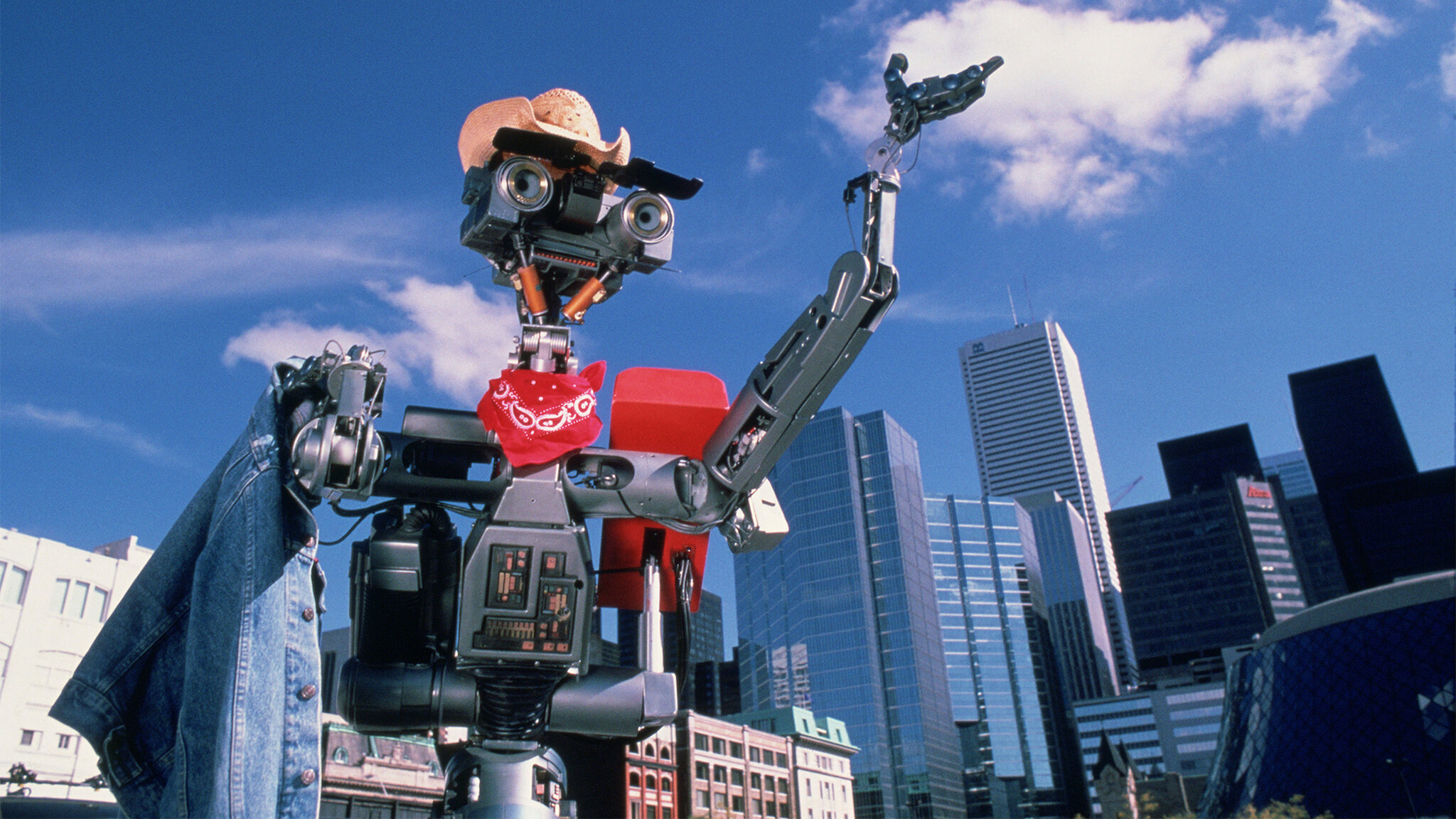
Johnny 5 on set
Like many practical-effects characters, Johnny 5 required multiple units for different shot needs (movement, close-up performance, backups). This helped maintain screen time and reliability during complex sequences.
References: Wikipedia (production notes), IMDb (budget & production basics)
“New York” vs. where it was actually filmed
The story is set in New York City, but multiple reputable location sources document that much of the filming occurred in Toronto and nearby Ontario locations, often dressed as New York landmarks.
References: TVO.org (Toronto staged as NYC), IMDb locations
Release and box-office performance
References: Box Office Mojo, IMDb (budget/gross), The Numbers (franchise totals)
Context vs. the first film
Compared to the original Short Circuit, the sequel earned less at the box office, which is part of why its reputation became more “fan-driven” over time (people who love it tend to really love it).
Reference: The Numbers
Reception
Critics
Critical response was mixed. Rotten Tomatoes lists a lower critic approval score for the sequel, and period reviews ranged from dismissive to mildly positive. Variety’s review described it as a gentle follow-up with “uncomplicated sweetness.”
References: Rotten Tomatoes, Variety review
Audience signal
Despite the mixed critic response, audience polling was stronger. Multiple summaries cite an A− CinemaScore grade, which lines up with the film’s long-term “comfort movie” status for many viewers.
Reference: Wikipedia (reception summary)
Why reviews split
- Tone: more sentimental and caper-like than the first film’s “lab escape” structure.
- Cast changes: the sequel moves forward without the original lead pair on screen, which some viewers feel immediately.
- Johnny 5 focus: others see the heavier Johnny 5 emphasis as the sequel’s biggest strength.
Reference (cast-change critique example): FictionMachine review
Cultural impact, legacy, and the fan divide
Over time, Short Circuit 2 developed a distinct identity: “Johnny 5 in the city,” with bigger personality beats, more jokes, more emotion, and a story built around human exploitation vs. robot personhood. That identity also explains the split fan reputation.
Why some fans prefer SC1
- Original chemistry: the first film’s core cast dynamic is the main anchor for many people.
- Cleaner premise: lightning + awakening + escape reads like a tighter “origin story.”
- Setting: the Pacific Northwest vibe is part of the first film’s personality.
Why some fans prefer SC2
- More Johnny 5: the sequel leans into him as the lead character more aggressively.
- NYC energy: bigger pace, more “street” humor, more scenarios for Johnny 5 to react to.
- Emotion: the sequel pushes harder on vulnerability and protection instincts.
Fan divide in the wild
If you want primary-source “fan sentiment,” threads like the one below show the split in plain language: people openly argue that the original is the classic, while others claim the sequel is the better movie.
Reference: Reddit (fan debate thread)
Legacy note: portrayal controversy
As with the first film, later discussion also includes criticism of the portrayal of Ben (an Indian character played by Fisher Stevens using makeup/accent), which remains a major part of how the franchise is discussed today.
Reference: Entertainment Weekly (regret/controversy coverage)
Music
The sequel’s score is credited to composer Charles Fox. The soundtrack and scoring are part of the film’s “big city caper” tone, helping shift the mood away from the first film’s lab-and-suburb feel.
References: Wikipedia (music credit), Charles Fox filmography
Cast & characters
The sequel shifts focus toward Ben and a new set of New York characters while keeping Johnny 5 front-and-center. Steve Guttenberg does not return on screen, and Ally Sheedy is credited as voice-only/uncredited in some listings.
Johnny 5
Voiced by Tim Blaney
Now more talkative, more referential, and more emotionally expressive. The sequel leans into Johnny 5 as a full character rather than a novelty: curious, funny, and increasingly aware of how humans can exploit him.
Ben Jahrvi
Played by Fisher Stevens
Ben moves to New York and tries to build a stable life by selling Johnny 5 toy replicas. He becomes Johnny 5’s primary human protector in the sequel, which is one reason the movie feels more like a “buddy caper.”
Sandy Banatoni
Played by Cynthia Gibb
A department store buyer who helps trigger the big toy order that drives the plot forward.
Fred Ritter
Played by Michael McKean
A con artist who manipulates the situation and pushes the story into a heist.
Filming locations (New York setting focus)
In-story, Short Circuit 2 is “Johnny 5 in New York City.” The movie leans hard on the idea of NYC as a character: crowds, storefronts, fast-moving streets, and iconic “big city” energy. That setting is the main reason the sequel feels so different from SC1.
The key detail: NYC on screen, Toronto in camera
Multiple location sources document that while the film is set in New York, much of the production used Toronto and Ontario locations dressed as NYC. A well-known example is the Yonge–Dundas area staged to resemble Times Square.
References: TVO.org (Yonge–Dundas staged as Times Square), IMDb locations
“Times Square” style street energy
The movie repeatedly uses big intersection, signage, and crowd staging to sell the NYC feel. Toronto’s downtown core is widely documented as standing in for those “New York” beats.
References: TVO.org, MovieMaps (Toronto/Hamilton locations)
Mall / department store “NY retail” sequences
The story’s toy-store / retail thread is a huge part of the NYC vibe. Location listings commonly point to Toronto’s Eaton Centre as a key stand-in for mall/retail sequences.
References: IMDb locations, MovieMaps
“New York” exterior landmarks and travel beats
Location listings for the film include a range of Toronto/Ontario exteriors used to sell city scale, banking, and street movement. These are often easier to validate through multi-source location databases.
References: IMDb locations, MovieMaps, The Numbers (context)
Want a “then vs now” fan-style location trail?
If you want a more visual “walkthrough,” fan location content tends to map shots to real streets in Toronto used as NYC doubles. These aren’t primary sources, but they’re useful for a fan site when clearly labeled as fan location research.
References: MovieMaps, IMDb locations
Why the NYC setting matters to Johnny 5
The city backdrop creates a different kind of story: more strangers, more noise, more temptation to exploit the robot, and more reasons for Johnny 5 to develop “street-aware” behavior. That’s a big reason SC2 fans often say Johnny 5 feels more fully realized here.